Home › Delivery Requirements
Shipping Container Delivery Requirements & Site Prep
The five checks that decide whether your delivery is a 20-minute non-event or a wasted trip — with the real clearance numbers for 20ft and 40ft trucks.
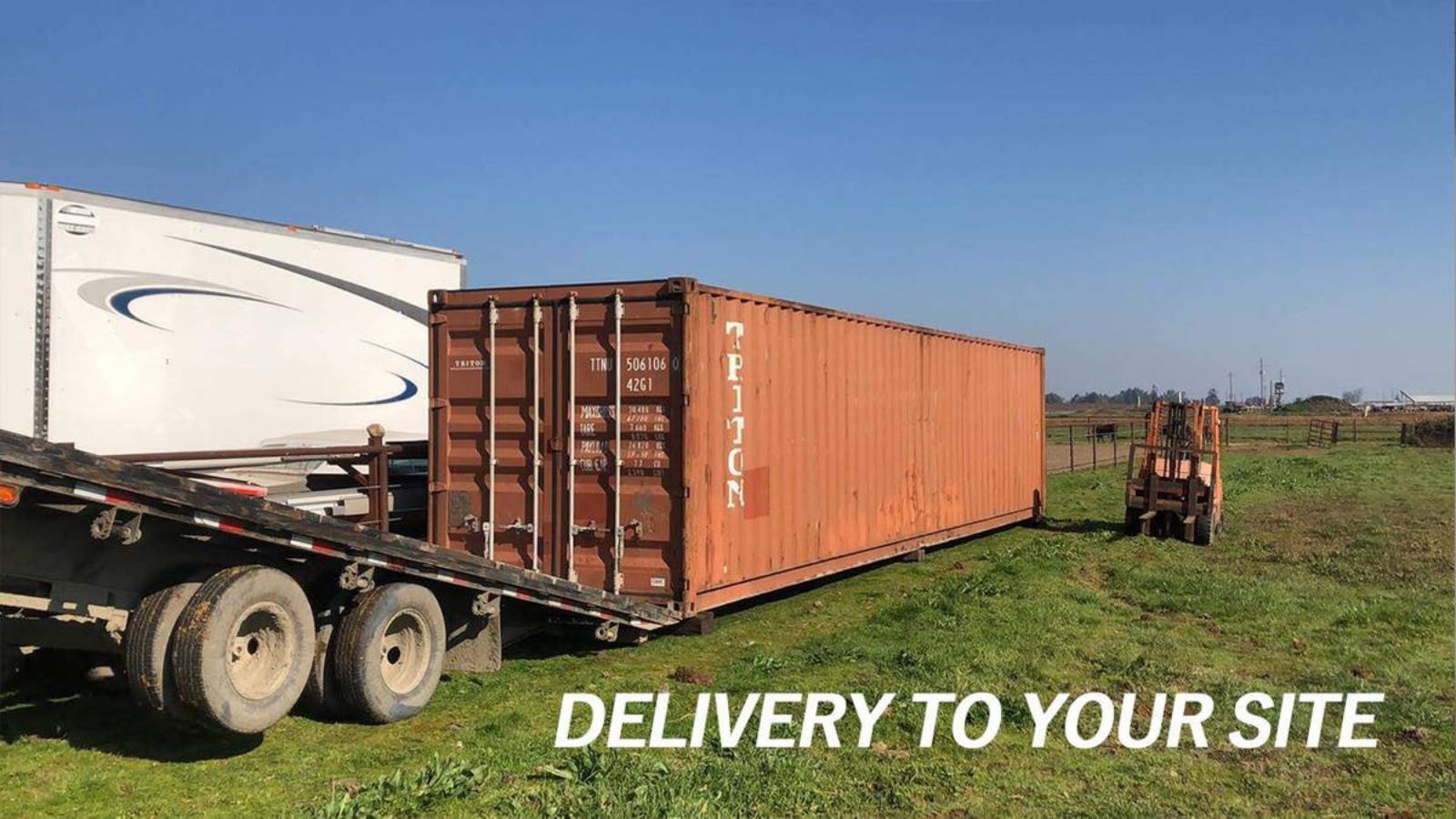
Almost Every Failed Delivery Fails for One of Five Reasons
We'd rather you read this page than pay for a second trip. Container delivery is simple physics: a tilt-bed truck needs runway, width, overhead room, firm ground, and a legal place to stand while the box slides off. Check those five and your delivery is a 20-minute non-event. Miss one and the truck goes home loaded. Here's how to check each, with the actual numbers.
1. Straight Run-Up (the Big One)
The truck approaches in a straight line and the container comes off the back as it pulls forward. A 20ft container needs roughly 60–75 ft of straight clearance; a 40ft needs 100–120 ft. Measure from where the container's far end will rest, out along the approach path. Corners, S-turns, and tight gates mid-path are what kill 40ft deliveries in dense towns — when in doubt, we walk it with you by phone and photos.
2. Width and 3. Overhead
Budget 12 ft of width the whole way in — gates, gaps between buildings, parked cars on both sides. Overhead, the tilted bed reaches high: keep 15–16 ft clear of wires, branches, and awnings along the approach and at the drop spot. Low service drops to houses are the sneaky one; look up before delivery day, especially on older tree-lined streets in Essex County.
4. Surface
Concrete and asphalt: always fine. Compacted gravel: excellent — it also drains, which your container's underside will appreciate for years. Firm soil or lawn: workable when dry; risky after rain (a loaded tilt-bed is heavy). Prep that pays for itself: railroad ties or concrete blocks under the four corner castings — the box stays level, the doors swing true, and the floor stays off ground moisture.
5. Legal Standing Room
If the truck must stage on a public street, some municipalities require a street-occupancy permit or cone plan — Hoboken and Jersey City are the strict ones locally; suburban driveway drops rarely need anything. Rules by town are in our NJ container permit guide, and we flag any permit need when we schedule your delivery.
Site Prep FAQ
Can a container be delivered over a curb or lawn?
Often yes, if the ground is firm and the approach is straight — but soft lawns after rain are the most common failed-delivery cause in North Jersey. Plywood tracking or waiting for dry ground usually solves it.
Do I need to be present for delivery?
You or someone authorized should be there to confirm placement and door orientation. Placement takes 15–30 minutes on a prepared site, and moving a container later costs a second delivery fee — get it right the first time.
What do I put under a shipping container?
On concrete or asphalt: nothing needed. On gravel or firm soil: pressure-treated timbers, railroad ties, or concrete blocks under the four corner castings keep the box level and off standing water — the single best thing you can do for its lifespan.
The Photo Checklist That Replaces a Site Visit
Four photos let us qualify almost any site remotely, and taking them takes two minutes. One: stand where the container's far end will rest and shoot back along the approach path — this shows the run-up. Two: shoot the approach from the street entrance looking in — this shows gates, width pinches, and turns. Three: stand at the drop spot and shoot straight up — wires and branches hide from ground-level photos but not from this one. Four: a close shot of the surface itself — we can read gravel depth, asphalt condition, and soft ground from texture. Text all four with your ZIP code and we'll confirm feasibility, flag prep, and firm up the quote in one reply — no site-visit fee, no delivery-day surprises.