Home › Container Buying Guide
Shipping Container Buying Guide
The six-step checklist we give buyers on the phone: size from your contents, match the grade to the job, verify the site, and never accept a quote without the grade in writing.
Six Steps to a Container You Won't Regret
This is the advice we give over the phone, written down. Follow the six steps and you'll do better than most first-time buyers — with us or with any honest competitor.
Step 1 — Size From What You're Storing, Not the Price List
Inventory what's going in. A household's furniture, a contractor's tools, or ~150 sq ft of anything → a 20ft. Materials, machines, pallets, or "the whole garage plus the attic" → the 40ft, which costs only 25–40% more for double the space. Racking or standing work → High Cube. Sizing down to save $500 and renting a storage unit for the overflow is the classic false economy.
Step 2 — Match the Grade to the Job
Front-of-property, long horizon, or a modified build → one-trip. Standard storage → cargo-worthy. Back lot and tight budget → WWT. Never buy ungraded. The four grades are defined in plain English in our condition grades guide.
Step 3 — Verify Your Site Before You Pay
Straight run-up (60–75 ft for a 20ft, 100–120 ft for a 40ft), 12 ft width, 15–16 ft overhead, firm surface. Five minutes with a tape measure — full instructions in the delivery requirements guide. And check your town's rules in the NJ permit guide if the box is staying long-term.
Step 4 — Demand a Delivered Price With the Grade in Writing
One number, to your ZIP code, grade named. This single habit kills 90% of container-buying horror stories: the "cheap" box that ships from three states away, the "cargo-worthy" that was WWT on its best day, the fuel surcharge that materializes on delivery morning. Real market ranges to sanity-check any quote are on our prices page.
Step 5 — Inspect (or Get Photos of) the Actual Unit
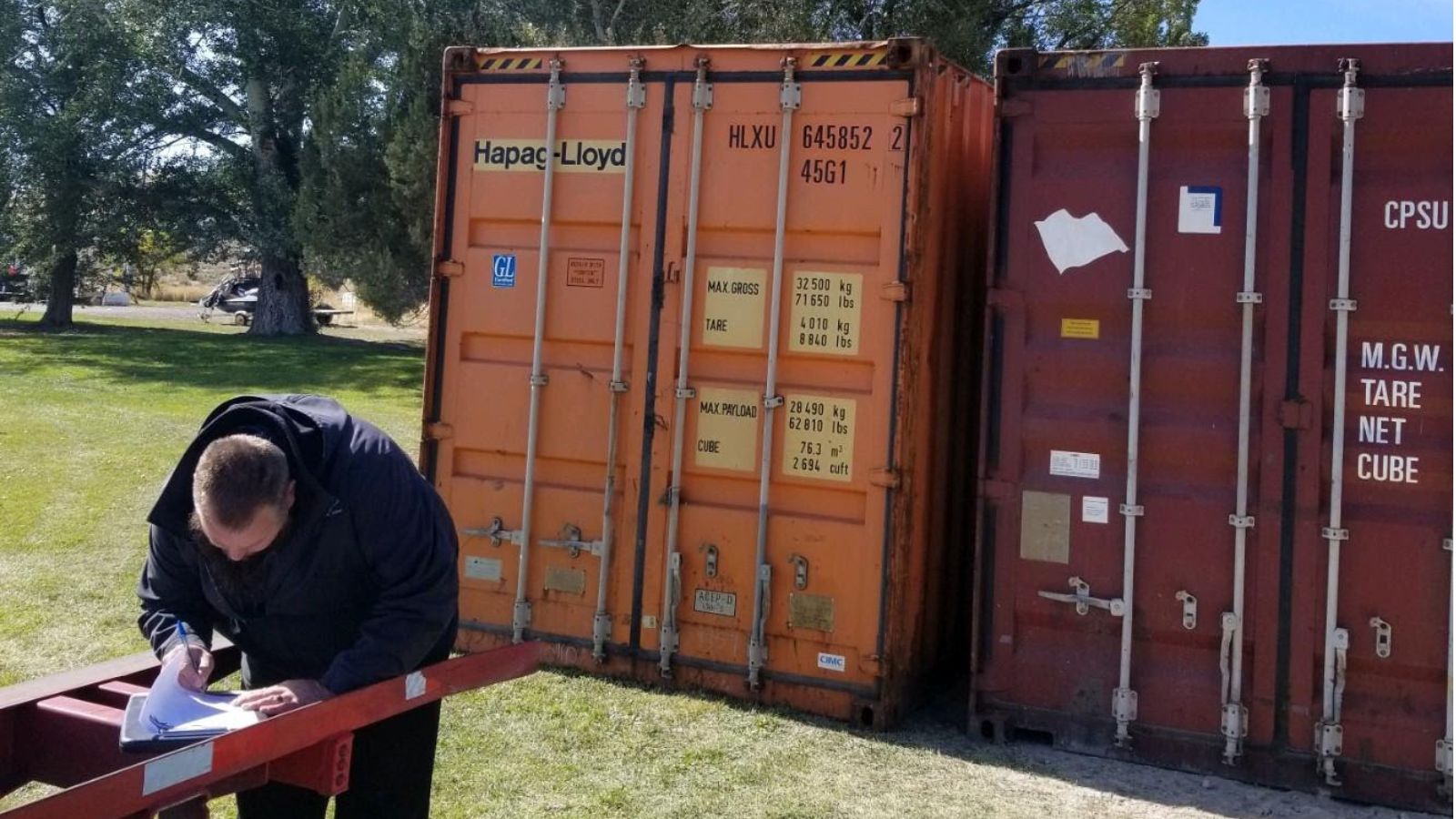
Four failure points: roof (ponding dents), floor (soft spots, chemical stains), door gaskets (cracked rubber = future leaks), corner castings (cracks = structural). Dated, unit-specific photos or an in-person look — any seller who won't provide them is telling you something.
Step 6 — Prep the Ground and Take Delivery Like a Pro
Ties or blocks under the corners, doors oriented the way you'll actually use them, and someone on-site to confirm placement. Then check the box against the quote before the truck leaves. That's the whole game. When you're ready — or want us to sanity-check a competitor's quote, which we'll happily do — call 862-236-3503.
Buying Guide FAQ
What's the biggest mistake first-time container buyers make?
Buying on sticker price instead of delivered price. The second biggest: accepting a grade ('cargo-worthy', 'like new') that isn't written on the quote. Both are solved by demanding one number, delivered, with the grade named.
Should I buy a container sight unseen?
Only with unit-specific, dated photos of the exact box — floor, roof, door seals, and corner castings — or an in-person viewing. Stock photos tell you nothing about the container that lands in your driveway.
Is it cheaper to buy a container at auction?
Sometimes on sticker, rarely on total cost. Auction units are as-is, ungraded, and you arrange (and pay) trucking yourself. Unless you can inspect in person and have your own transport, a graded, delivered box usually wins.
Red Flags That End a Deal on the Spot
Six years of quotes have produced a short list of walk-away signals, offered here for use against anyone, including us. A deposit demanded before a written quote exists. A seller who won't name the container's current physical location — "our network" means a broker who hasn't sourced your box yet. Stock photos presented as the unit for sale. A delivered price that can't be itemized into box and trucking — padding hides in fog. Grade language that shifts between the call and the invoice. And pressure tactics of any kind — genuine port-market supply means genuine availability, so urgency theater signals either a broker's thin pipeline or a unit that shouldn't sell at all. Any one of these justifies hanging up; two of them guarantee it.